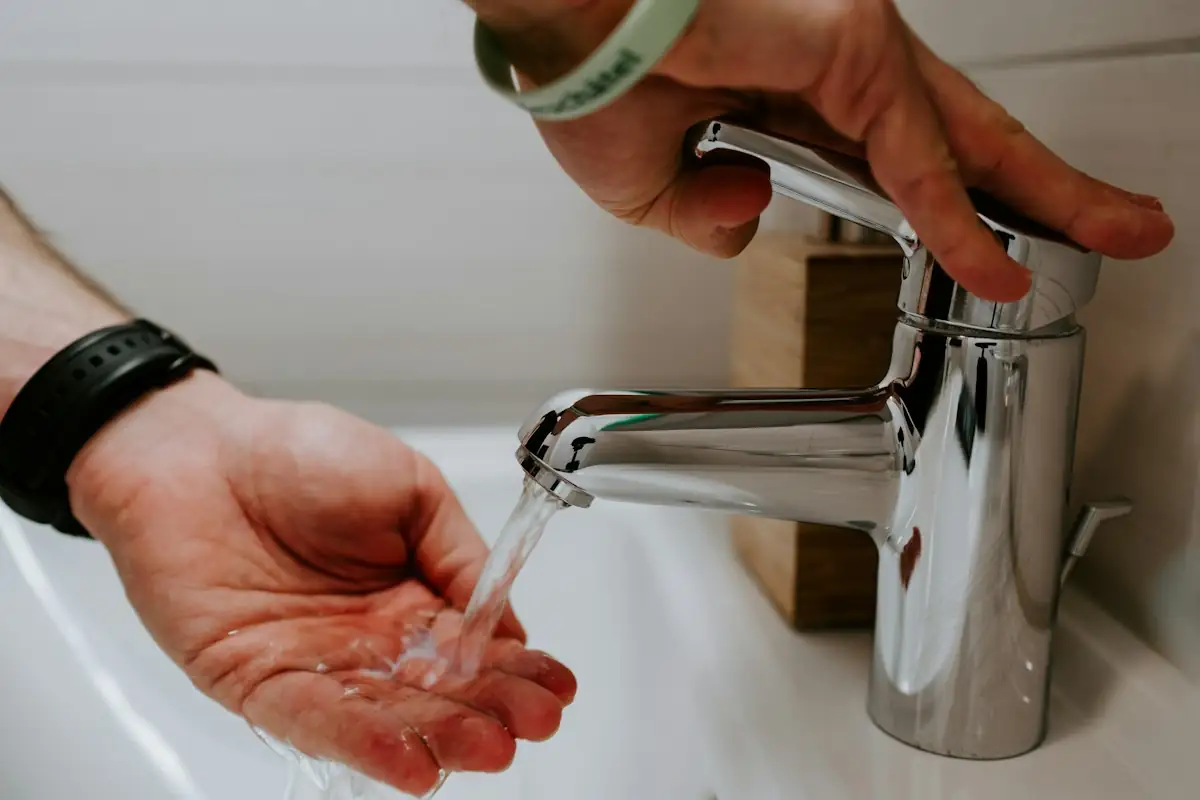
Cartridge and washer faucets
Older two-handle taps use rubber washers pressed against a seat. When the washer hardens or the seat erodes, the tap drips. Newer single-handle faucets rely on a cartridge or ceramic discs. Hard water leaves scale on cartridges that makes handles stiff and lets water pass. We identify the faucet, find the matching cartridge or washer, and clean the seat or body before reassembly.
Kitchen pull-downs
Pull-down sprayers add a hose, a weight and a quick-connect fitting under the sink. Leaks there show up as water in the cabinet rather than at the spout. Hoses crack at the bend, and weights slide out of place so the head does not retract. We replace hoses, reset weights and check the supply lines and stops while we are under the sink.
When to replace
- The housing is cracked or corroded.
- Parts are discontinued or cost close to a new faucet.
- The finish is worn through and you are tired of looking at it.
- You want touchless, a higher spout, or a different hole count.
- Close the stops, then crack the tap so the line goes slack.
- Remove the lever and cartridge.
- Replace parts, reassemble, and test hot and cold.
Signs you need this in your house
- Drip from the spout after shutting off
- Handle stiff or loose
- Water under the sink after use
- Low flow at one tap
Questions people ask us
My shut-off under the sink will not close. Now what?
Old multi-turn stops often seize. We replace them with quarter-turn valves during the repair.
Can you fix a leaking spout base?
Usually, with new O-rings on the spout.